The influences for this project are three fictional characters: “Regina George” from the movie “Mean Girls”, “Harry Potter” from the movie series “Harry Potter” and “Hannah Baker” from the Netflix series “13 Reasons Why”.
<img src="https://adolescentdevelopment.school.blog/wp-content/uploads/2020/11/mean-girls-1.jpg?w=442" alt="<em><strong>The young female in the middle is Regina George from the movie "Mean Girls". The young girls surrounding her are the individuals who make up the friend group "The Plastics"</strong>The young female in the middle is Regina George from the movie “Mean Girls”. The young girls surrounding her are the individuals who make up the friend group “The Plastics”
This young female is a known as Hannah Baker from the Netflix series “13 Reasons Why”
This young male is Harry Potter from the movies series “Harry Potter”
Regina George is a high school student who is very intelligent and manipulative, she was often referred to as the “Queen Bee” of the school due to her superiority within her school setting. She was the leader of her friendship group named “The Plastics”.
Harry
Potter is a young boy who was orphaned as an infant by an evil and very
powerful wizard named Voldemort. The movies then go on to explain Harry’s
lifestyle, friends, hardships and important decisions he has to make as an
adolescent. The movies show him growing through the adolescence stage and how
his decisions begin to differ from a young adolescent to an older adolescent
almost reaching the stage of early adulthood.
Hannah
Baker is a 17-year-old sophomore student in high school who, in the start of
the series, commits suicide by slitting her wrists. Which is due to ongoing
bullying and rape which cause many mental health issues for Hannah. She became
so overwhelmed with her situation and traumas, even though she reached out for
help but that also failed her, she believed taking her own life was the only
way to end the pain she was feeling.
Adolescence is a unique developmental period. Spears (2000) states that adolescence refers to the period marking the transition from childhood to adulthood. Adolescence frequently co-occurs with puberty, a biological phenomenon defined by a constellation of events that are driven by increases in adrenal and gonadal hormones, including the development of secondary sex characteristics and modulations in muscle and fat.
I have used these three very different characters so as the analysis using the theories is clearly stated and very easily identifiable. It was very interesting to write about such contrasting characters. Each character was linked to one or more theories as another character however the overall demeanor of the characters were very different to one another. This goes to show that most, if not all, adolescents develop in similar ways, but they have to face different scenarios or decisions to one another which is what makes them so different to each other.
This product reflects adolescent behaviour through the analysis of the three fictional characters: Regina George, Harry Potter and Hannah Baker.
I have linked personality development theory, cognitive development, moral development, and sex and gender development theory. As for the character of Harry Potter, I used the example of the group processes. Completing this task made me begin to understand that there is a reason for the different behaviours of adolescents. Knowing and understanding this will certainly be very useful for me because I am currently studying to become an English Teacher whose students will mostly be adolescents.
In this product adolescent behaviour is explained through the use of Bronfenbrenner’s bio-ecological theory, sexual development , Tuckman’s group processes theory
Bronfenbrenner’s Bio-ecological Theory
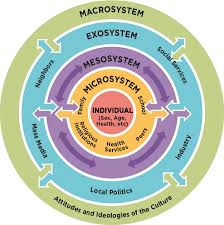
Bronfenbrenner’s bio-ecological systems of individual development.
Berk (2000) states that the microsystem is the layer closest to the child and contains the structures with which the child has direct contact. It shows the relationships and interactions a child has with her/his surroundings. Structures in the microsystem include family, school, neighborhood, or childcare environments. At this level, relationships have an impact in two directions – both away from the child and toward the child.
The idea behind Bronfenbrenner’s theory is that there is an individual in the middle which is the first layer and the rest of the layers are built upon that. As shown in the diagram above the purple layer represents the individual system which is very basic it consists of the individuals age, gender, health which includes mental and physical health issues. The individual system for Regina George would be 16, female and no diagnosed health conditions. The individual system for Hannah Baker is much different to that of Regina George. Hannah was a 17-year-old female who suffered from depression and anxiety due to severe bullying which resulted in her committing suicide.
The micro-system is shown in the orange layer of the diagram above, this layer consists of the environment the individuals lives in and the people that individual interacts with in this environment. For most individuals this consists of immediate family members, school teachers and peers. In Hannah Baker’s case her micro-system consisted of her mother, father and her close friend Kat, who in the start of the series moves away leaving Hannah without any other friends. All of the individuals within Hannah’s micro-system are very close to her and she feels comfortable around them. This explains why Hannah did not feel comfortable in explaining to anyone her bullying situation at school as after her friend had moved away her parents had started to face financial issues. So without wanting to add to her parents’ stress she decided to bury her issues, which results in her committing suicide. Whereas in Harry Potter his micro-system consists of his Aunt, Uncle, cousin, Albus Dumbledore (Headmaster at Hogwarts) Sirius Black and his two best friends Ron Weasley and Hermione Granger and none of whom he is close to as they treat him very unfairly and borderline abuse him. He is forced to sleep in a cupboard under the stairs, is verbally abused and felt as though is means nothing to anyone.
The meso-system is depicted in the purple layer, this system relates to the interactions that the individuals within the micro-system have amongst each other. The individual is not directly involved with these interactions but is still diversely affected by them. For example, Hannah Baker’s parents and her friend. Kat, had very positive interactions, which made Hannah feel as though she had a strong network of individuals around her. This caused her to feel safe within her environment however as soon as Kat moved away this network started to fall apart due to external factors her parents were facing. This resulted in Hannah to become withdrawn and reluctant in asking for help or guidance.
“You don’t know what goes on in anyone’s life but your own. And when you mess with one part of a person’s life, you’re not messing with just that part. Unfortunately, you can’t be that precise and selective. When you mess with one part of a person’s life, you’re messing with their entire life. Everything. . . affects everything.”
The exo-system is the blue layer of the diagram above this layer relates to the wider community the individual lives in. This includes extended family, family friends, mass media, workplaces, healthcare systems and the list goes on. Hannah Baker’s exo-system involved her work colleagues and social media. In the series Hannah becomes “viral”, an indecent photograph of her is taken by her date, Justin Foley, who then proceeds to show his best friend and “King of the school”, Bryce Walker. Bryce decides “send that shit around” and cause Hannah to face severe embarrassment and betrayal by her date, Justin. This is one of the many reasons to Hannah’s suicide.
Scene of Hannah Baker’s picture going viral.
The macro-system is the green layer of the image above, it contains the attitudes, ideologies, values and customs of a particular culture or subculture.
As a teacher, in this area of development the behaviour that is needed is someone who can communicate efficiently with both the students and their parents. Teachers who are able to invite parents to have an active role in their adolescent’s education are the types of teachers that are needed. An active role can be in the form of volunteering at school or attending school conferences to discuss the situation of their adolescents. According to Epstein (1997), the formal conference around a child’s academic and social wellbeing is the most significant occasion in which the overlapping spheres of home and school are drawn together to address a common goal, the child’s development. If I were Hannah Baker’s teacher, I would have actively communicated with her parents in order to see why her grades had dropped staggeringly low, why she had become withdrawn and why she no longer seemed happy. By doing this teachers and parents are able to look for signs and communicate with adolescents and help them.
Adolescence is a transitional stage of physical, emotional, and cognitive human development occurring before the onset of puberty and ending by adulthood. Sexuality, the expression of interest, orientation, and preference, is a normal part of adolescence. Adolescent sexuality encompasses multiple factors, such as developing intimate partnerships, gender identity, sexual orientation, religion, and culture.
Kar, Choudhury, and Singh (2015) state that growth and development are continuous processes, which bring a change in an individual, every moment. The development of sexuality starts as early as in intrauterine life following conception and continues through infancy, childhood, adolescence, adulthood till death. During infancy, there is no awareness of gender.
The child acknowledges its gender in early childhood as early as by 3 years. Self-awareness about sexuality (gender role, gender identity) evolves during childhood. Adolescence is a phase of transition during which major developments of sexuality takes place. Puberty is reached during adolescence, which is a major landmark in the development of sexuality. During the adolescence period, adolescents may be sexually attracted to the opposite sex, same-sex, or both. If they are in a relationship that is more than just a friend, adolescences show it by giving more attention to their partners. It can be verbally, by saying things for example “you are very beautiful in so many ways, it would take me a lifetime to express them in words…” or by sending a romantic message. As a couple, adolescences do not hesitate to show the PDA ( Public Display of Affection ), such as giving each other kisses, hugs and holding hands.
Out of the three characters I have chosen to write, Regina George is the one who most fits in being sexually active.
She explicitly talks about being “half a virgin” whilst dating her then boyfriend, Aaron Samuels. Meaning that she was sexually active and whether she had received any form of education about sexual development remains a mystery. She, however, had decided that her sexual orientation was heterosexual and that she very much so enjoyed showing off her body. For example, she attended a Halloween party and whilst her friend, Cady, was unaware that dressing in sexy and skimpy clothing was what Halloween was about Regina and the rest of “The Plastics” knew exactly how to dress.
Halloween Party scene
Appropriate teacher behaviour during this type of development is key, teachers who are open-minded and do not judge students are very important. This is because, during the adolescent period, students start their experience in sexual and gender development. Sexual attraction towards other people begin. By having an open mindset, a teacher can understand sexual and gender development during this adolescent period. Outside the classroom, teachers can spread positive messages to other teachers or school staff and students to stop bullying to those who have a different sexual orientation, because there is still a lot of bullying towards adolescents who are included in the LGBTQ group.
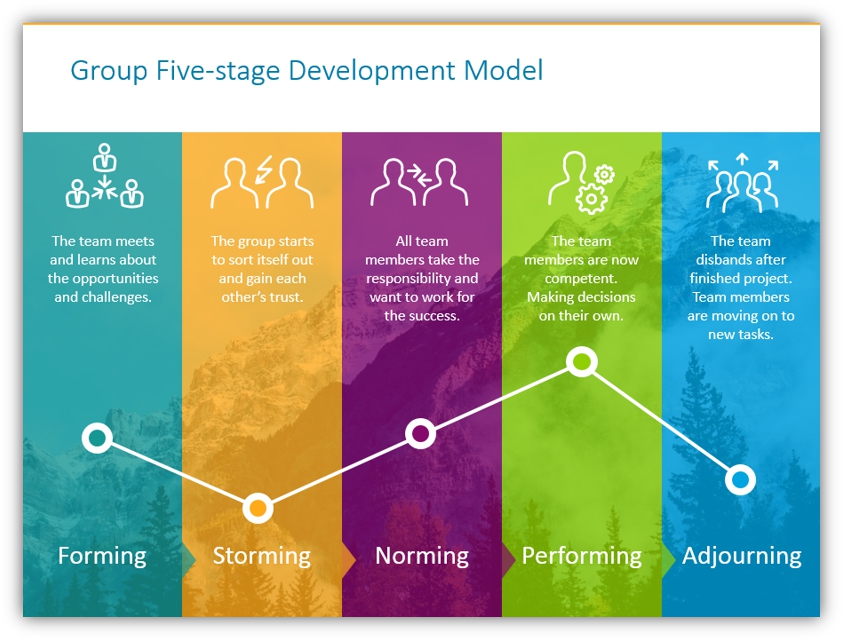
Tuckman’s Stages of Group Development
Recruiting for Dumbledore’s army
The video above sows the forming and storming stages of Tuckman’s group development theory. At first Harry has doubts whether he would be a good leader and teacher, however he is still lead to a cabin in which all his clasmmates are and his friend, Hermione, begins to talk about the reason for their meeting. This is the forming stage. Then as everyone is disagreeing a young female, Luna Lovegood, speaks up and all is settled this is the storming stage.
This video shows the norming stage, each young witch and wizard practicing their magic in order to become a great fighter in the upcoming war.
This video shows the performing stage, this is when Harry and his classmates put to use what they have learned and are now fighting til the death.
This last video shows the adjourning stage of Tuckman’s theory in which the war has been fought and everyone goes along their separate paths.
Brophy (2004) states motivation research combines student learning aspirations and teachers ‘ role in inducing their students to participate in classroom work. All views consider learning to gain fulfilment in the growth and the achievement of goals, new knowledge, skill development, interest–in one term; learning.
Furthermore, we know that classrooms are social environments, places where teaching and learning take place in a social way between teachers and students. When teaching and learning take place, the processes are complicated and the relationships between peers are affected. Team processes in classroom settings are conducted through communication and engagement between teachers and students and students amongst themselves as they work side by side.
Effective communication is key during group processes and as a teacher this must be ensured. With effective communication, from two directions, agreements and class rules will be created. The communication includes standards for classroom behaviour, as well as encouragement for students to participate in making decisions for themselves and establishing group agreements for classroom procedures. Effective communication is only effective if students and teachers understand each other, the teacher helps build a participative, relaxed, personal, and supportive climate during the discussion. The teacher is open and accepts students ‘ideas, egalitarian attitudes, warmth, respect for students’ feelings, sensitivity to outsider feelings, sense of humour, and caring attitude.
Personality Development
According to Erik Erikson ( 1968 ), the main task of adolescents is to solve the crisis of identity versus role confusion. Good relationships with peers are also linked with the better emotional and psychological well-being of adolescents. However, there is a lack of reviews of studies in the scientific literature examining the relationship between adolescents’ identity development and relationships with peers. Identity provides a sense of continuity within the self and in interaction with others, as well as a frame to differentiate between self and others which allows the individual to function autonomously from others.
In addition, Erikson’s concept of identity focused on the development of adolescents. For these purposes, the concept of identity was used in this study based on Erikson’s theory of psychosocial development. The formation of adolescents ‘ identity is strongly linked to their peer relationships. The formation of teenage identity is strongly linked to belonging to a peer group and good relationships with peers based on mutual respect and acceptance.
Harry Potter, is the main character from the Harry Potter movies and his life is very difficult. He was an orphan whose parents were killed when he was an infant, so he was forced to live with his aunt and uncle. They mistreated him and he struggled with who he really was. He didn’t understand why his aunt and uncle mistreated him as he thought he was the same as them, muggle. He had no idea of what wizardry or magic was and on his 11th birthday he received a letter from Hogwarts School of Witchcraft and Wizardry. This letter allowed him to go to a school in which he was able to understand his past and feel closer to his parents. He finally developed his identity and became one with it and thrived. This can be a clear example of identity development for adolescents because it shows that with good relationships with family or friends, it helps set adolescents on their path toward self-discovery as they learn.
In the last movie of the Harry Potter movies Harry is now a father and has children and sends them to Hogwarts School of Witchcraft and Wizardry so that his children are able to develop their own identities. He looks at peace and proud that he has finally overcome all his hardships and become a stronger and better man and his son is following in his steps. This is an example of Erikson’s theory. This shows, how the personality develops of an adolescent.
Gecer (2002) states when working to provide knowledge, expertise, and attitudes on a particular topic for students at a certain level of development, teachers are role models for students through their own behavior and attitude. Positive attitudes lead to success while negative attitudes lead to failure, resulting in success leading to positive attitudes towards the ego, while failure leads to negative attitudes towards the ego. For example, if the teacher does not comment on a student because of his / her failure, the negative effects of this will be inevitable. On the other hand, a teacher’s positive attitude affects the motivation of the student, the attitude towards school and schoolwork, the self-confidence of the student and as a result the development of personality.
A teachers behaviour at this stage should be positive and help the adolescents improve and motivate them in order to reach goals which they are capable of. I, personally, would use feedback dialogue as a way to motivate my students. I would discuss their homework and classwork individually and give them a sincere compliment and an achievable goal for next time. This allows the adolescent to feel included and will hopefully show an interest in the discussion and understand how to improve.
Cognitive Development
Douthit (2018) states that cognitive development refers to the changing thought processes that occur as we mature. Cognitive development begins as soon as we’re born and continues into adulthood. Cognitive development in adolescence brings about important changes that allow us to transition from a child to a full-fledged, mature adult. Moreover, Douthit (2018) states that Piaget used the term “Stage of Formal Operations” to describe the stage of adolescent cognitive development. This stage is the one in which children gain the ability to think in abstractions and hypotheticals. They begin to use their imaginations in more practical ways. While young children may use their imaginations in play, adolescents use their imaginations to understand people and subjects more completely.
Hannah Baker made a decision which she believed would help her situation. She was being bullied, harassed, forced to keep dark secrets and eventually it became too much. Even when she did the “right thing” and went to the school counsellor, Mr Porter, she didn’t directly tell him everything. She assumed he would understand or ask more probing questions or even come out of his office after she left and stop her, but he didn’t. This then forced her to make an emotional decision which ended in her taking her life. However, the outcome of the decision isn’t the main point, the fact that she understood that when she couldn’t handle or deal with all that she knew, felt and endured she went to find the appropriate help first. This shows maturity in her decision that she knew where to receive help and who can help her. What Hannah did was an example of cognitive development. Hannah was able to make a decision, despite it being a difficult one, it was the right decision to find help.
Hannah’s conversation with Mr Porter (School Counsellor)
Sanders (2003) said that the development of cognitive, psychosocial, and emotional toward adolescents is the progression of thinking from a child’s way of thinking to that of an adult. Adolescents acquire more advanced reasoning skills here, including the ability to consider a wide range of possibilities inherent in a scenario, and use a logical process of thought. Adolescents move from being concrete thinkers that think of things with which they have direct contact or knowledge, to abstract thinking, that can think of things that have not seen or experienced.
The behaviour of a teacher should be approaching and comforting so that adolescent feel comfortable in discussing their situations with their teachers, it is very important for teacher to understand and be patient with adolescents. During the period of cognitive development, an adolescent is very vulnerable to stress, lack of attention from family or feel embarrassed or sensitive because of peer pressure. Therefore, appropriate teacher behaviour can help adolescent feel comfortable and not pressurised in communicating their issues with their teachers. For example, an adolescent may become overwhelmed with the of work they have to understand, complete and revise in order to achieve their target grades. Using appropriate teacher behaviour the adolescent would feel comfortable in explaining what their issue is and both the adolescent and the teacher can find a solution.
Neurological Development
Griffin states (2017) that the gradual brain developments which take place during the adolescent period show themselves in behavioural, cognitive, and emotional changes. This critical period for brain development enables adolescents to negotiate their trial and error journey towards independence. The brain’s growth has largely been done before adolescence, but it undergoes extensive remodelling in the adolescent years.
The focus is no longer on the proliferation of neurons, but on strengthening the network of connections between them. The brain’s wiring changes and develops in a number of ways. The brain’s axons gradually become more insulated by myelin (which gives ‘white matter’ its appearance). Myelin changes are dramatic during adolescence, with the amount of myelin doubling in some brain regions. The insulating effect means impulses or messages can pass at a far higher speed along the axon. At the same time, dendrites, which receive transmissions from nearby axons, grow more branches, increasing their connectivity.
As detailed above, in the adolescent period, it has been observed to be a time of dramatic changes in body and behaviour. During adolescence, most people successfully navigate the transition from dependence upon caregivers to self-sufficient adult members of society. Where specifically, along the maturational path of cognitive and emotional development, individuals should be given certain societal rights and responsibilities continues to be a topic of intense interest.
This type of behaviour can be seen in Harry Potter’s character as he goes through the adolescence stage of life his actions are very predictable which then cause a series of unfortunate events. However, in his last fight to the death with Lord Voldemort he is very creative in how he conducts the fight which leads him to become triumphant. His neurological development increased greatly due to his experiences and he was able to learn from what had already happened and mature his decisions. Before the last fight Potter was able to lead his peers and teach them that he had learnt from his previous experience. He was able to lead, guide, teach, empathise and console his peers, these actions show that he had developed, significantly, neurologically. These actions show that his capacity to organise thoughts and arguments are outcomes of the neurological process.
Starbuck (2018) noted that adolescent can be especially challenging, although teachers can help, and teachers support students at school by understanding them about what is happening in days. In recent years it has greatly improved the understanding of brain development through technological advances. She continued that studies have demonstrated that this age group is best developed in an environment that promotes sleep, food, exercise, and self-care. Teachers should seek a range of methods of learning that encourage students to think for themselves. Maintaining brain activity will help develop and improve the neural roads necessary for long-term learning.
As a teacher, I will try to my students to ask them into the risky thinking of teenagers to help them improve their thinking. One of the advantages of growth is taking risks and preferring difficult tasks. By encouraging pupils to take chances in a safe and safe environment, students can challenge each other further if their teachers guide this risky behaviour.
As a teacher I will try to encourage my students to think “out of the box” or peculiarly as this will broaden their thinking skills. Adolescents are in a rapid growing stage and will face many hurdles in their lifetime. Therefore by encouraging students to thinks in these ways in a safe and secure environment, wherein a teacher is able to oversee their thinking process and be able to guide them when necessary, is very helpful and a quality life skill.
Moral Development
Ma (2013) states that moral development is the conception of the parameter was based mainly on Kohlberg’s theory of moral judgment development which is concerned with structures of moral thinking about interpersonal conflict situations. The principles of justice defining Stage 6 are said to be content-free, self-chosen, and non-contingent upon any prior agreement or contract. Furthermore, Ma (2013) states the only assumption is that it applies to all human beings. In other words, all persons are treated as morally equal, and commutative justice is regarded as reciprocity, contract, and trust. Hence, Kohlberg argues that the principles of justice in his Stage 6 satisfy the formalist requirement that rational moral judgment must be reversible, consistent and universalizable. Ma (2013) adds that moral development requires a variety of abilities which are related to cognitive processes and their efficiency: complex situations need to be interpreted, relevant information must be selected and processed, information needs to be integrated, perspectives need to be coordinated, consequences of actions need to be anticipated, inferences need to be made, social norms need to be restructured and applied. Therefore, it seems plausible that moral judgments or decisions require reasoning abilities and problem-solving skills.
Hannah Baker, who kept her friend’s rape a secret because she didn’t want to upset her friend as her friend was drunk and passed out. However, she overcomes her fear and tells her friends what happened that night at the party that she couldn’t remember. At first her friend didn’t believe her and then once she did she helped her friend through the process of dealing with what happened to her. Hannah knew that hiding the truth from her friend was not right which was why she told her the truth eventually. She did this so that her friend could finally understand what had happened and could find some peace that the night she couldn’t remember and the unexplained pain and bruises on her body were finally explained. This is an example of the moral development theory from Kohlberg. Hannah took this step as she knew it was the right thing to do morally as it was not her information to keep hidden.
The behaviour of a teacher which is suitable in this area are those who have social orientation behaviour. The reason is a socially orientated teacher always pays upmost attention and care to the students. The teacher can encourage the students to help and create a better atmosphere and conduct for the classroom. The teacher will help strengthen the moral character of the students and makes the students partly responsible for the rules of the classroom that they should follow.
Agustiani, I. W. D. (2019). Maximazing Teacher Roles In Shaping Self-Directed Learners. English Community Journal, 3(1), 289. DOI: 10.32502/ecj.v3i1.1694
Akcinar, B., & Baydar, N. (2016). Development of Externalizing Behaviors in the Context of Family and non-Family Relationships. Journal of Child and Family Studies, 25(6), 1848–1859. DOI: 10.1007/s10826-016-0375-z
Espelage, D. L. (2014). Ecological Theory: Preventing Youth Bullying, Aggression, and Victimization. Theory Into Practice, 53(4), 257–264. doi: 10.1080/00405841.2014.947216
Geerts,W. (2018) The Teachers Handbook. Coutinho Bussen
Griffin, A. (2017). Adolescent Neurological Development and Implications for Health and Well-Being. Healthcare, 5(4), 62. doi: 10.3390/healthcare5040062
Lancellotti, M., & Boyd, T. (2008). The effects of team personality awareness exercises on team satisfaction and performance. Journal of Marketing Education, 30(3), 244-254
Ma, H. K. (2013). The Moral Development of the Child: An Integrated Model. Frontiers in Public Health, 1. doi: 10.3389/fpubh.2013.00057



 Adolescent Development
